
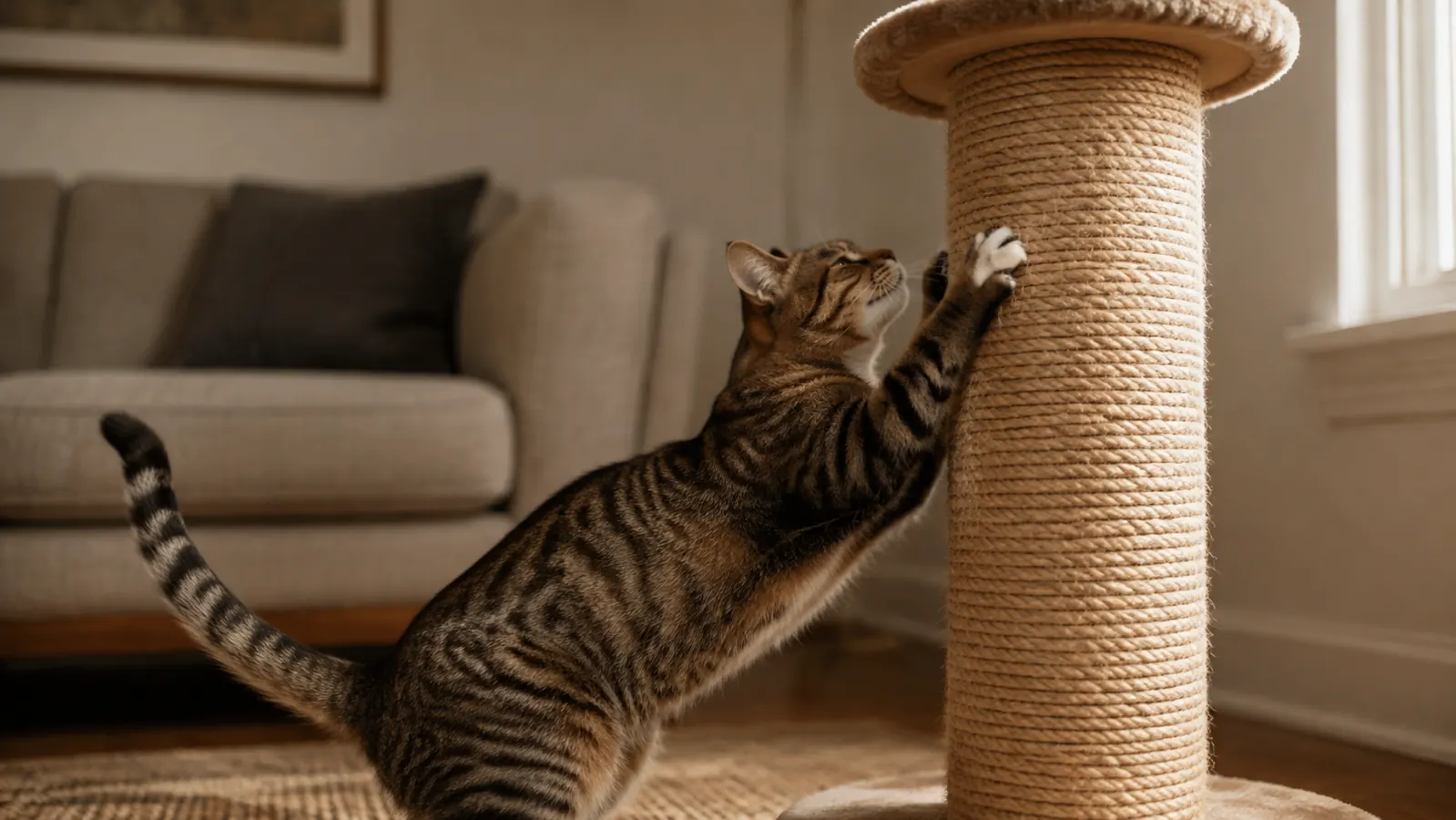
I grew up with dogs, so the first time I lived with cats I assumed scratching was a bad habit I could train out of them. Point at the loop on the sectional, say no in a firm voice, and the smart one would get the idea, same as a puppy with a shoe. It took about a week with our first cat, Mabel, to learn that cats are not dogs. Scratching is not mischief. It is a reflex as hardwired as breathing, and my plan to scold it out of her just made her scratch the couch when she thought I was not looking.
What finally worked was not punishment, and it did not happen overnight. It was a sturdy SmartCat sisal post placed exactly where she already wanted to dig her claws in, plus a little patience while she figured out the new routine. Six months later our couch survives, all three cats use the same post, and I want to walk you through exactly how we got there. Skip the gimmicky sprays and the double-sided tape arms race. This is the boring, reliable version that actually works.
Start with a post your cat cannot tip over
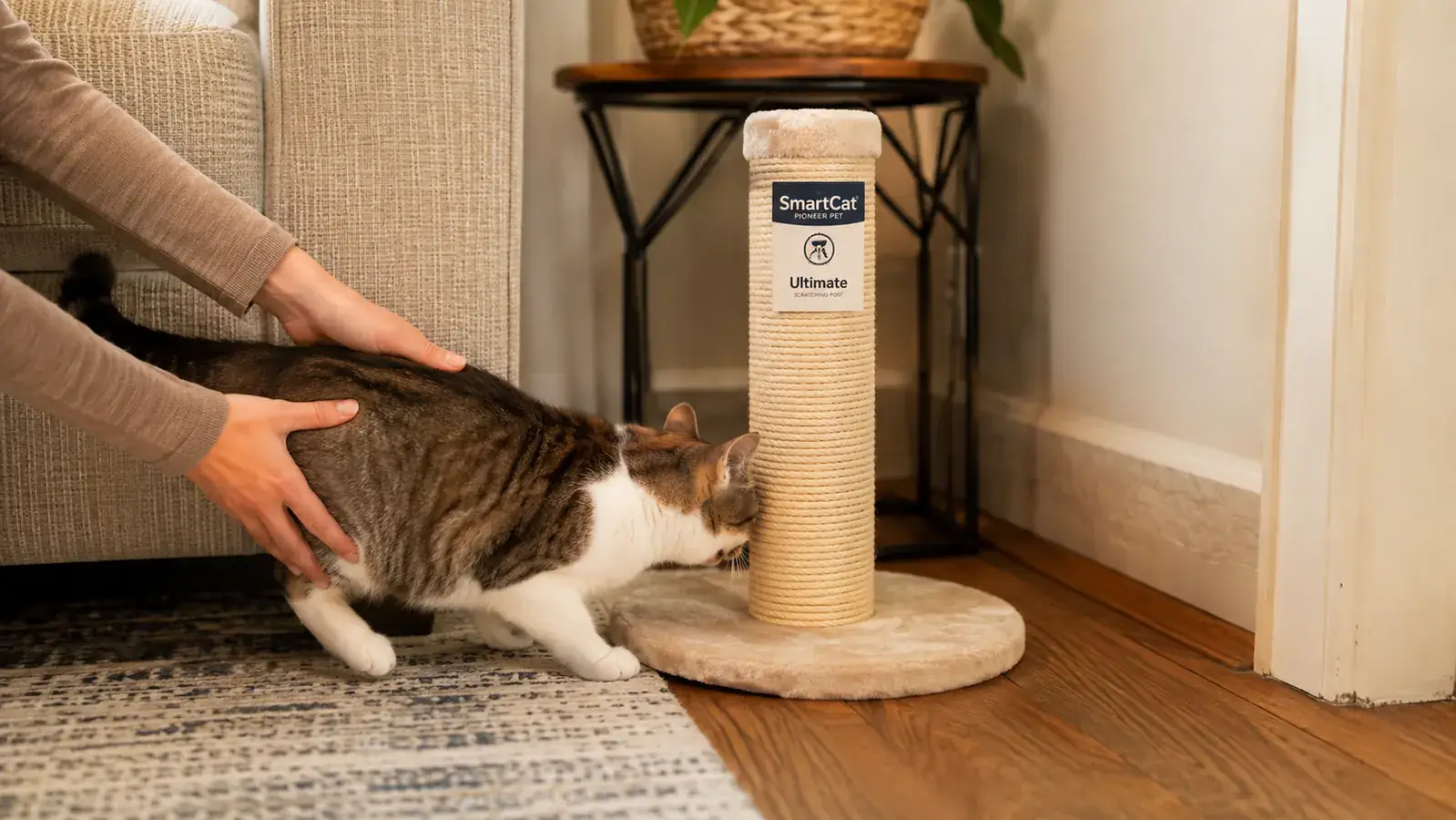
The whole plan falls apart if the post wobbles. A tall, heavy-base sisal post like the SmartCat Ultimate Scratching Post survives a full-body stretch from a 12-pound cat without sliding an inch. That stability is why redirecting works.
Amazon Check Today's Price on Amazon →Step 1: Walk where your cat walks and find the scratching spots
Before you buy or move a single thing, figure out where the damage actually happens. Cats do not scratch randomly. They scratch the corners of the couch, the arm of the chair, the side of the mattress, the spot by the front door. Each of those is a marking post. The cat is leaving visible claw marks and scent from the pads of their paws to say this spot is mine and I have been here.
So do the awkward thing and get down on the floor where the cat lives. Which arm is shredded? Is it the end of the sofa nearest the window? The stair post you brush past every morning? Make a mental list, because each one of those is a place your new post is going to need to compete with. I found that all three of our cats favored the couch corner closest to the back door, the spot where everyone comes and goes. That told me exactly where the action was.
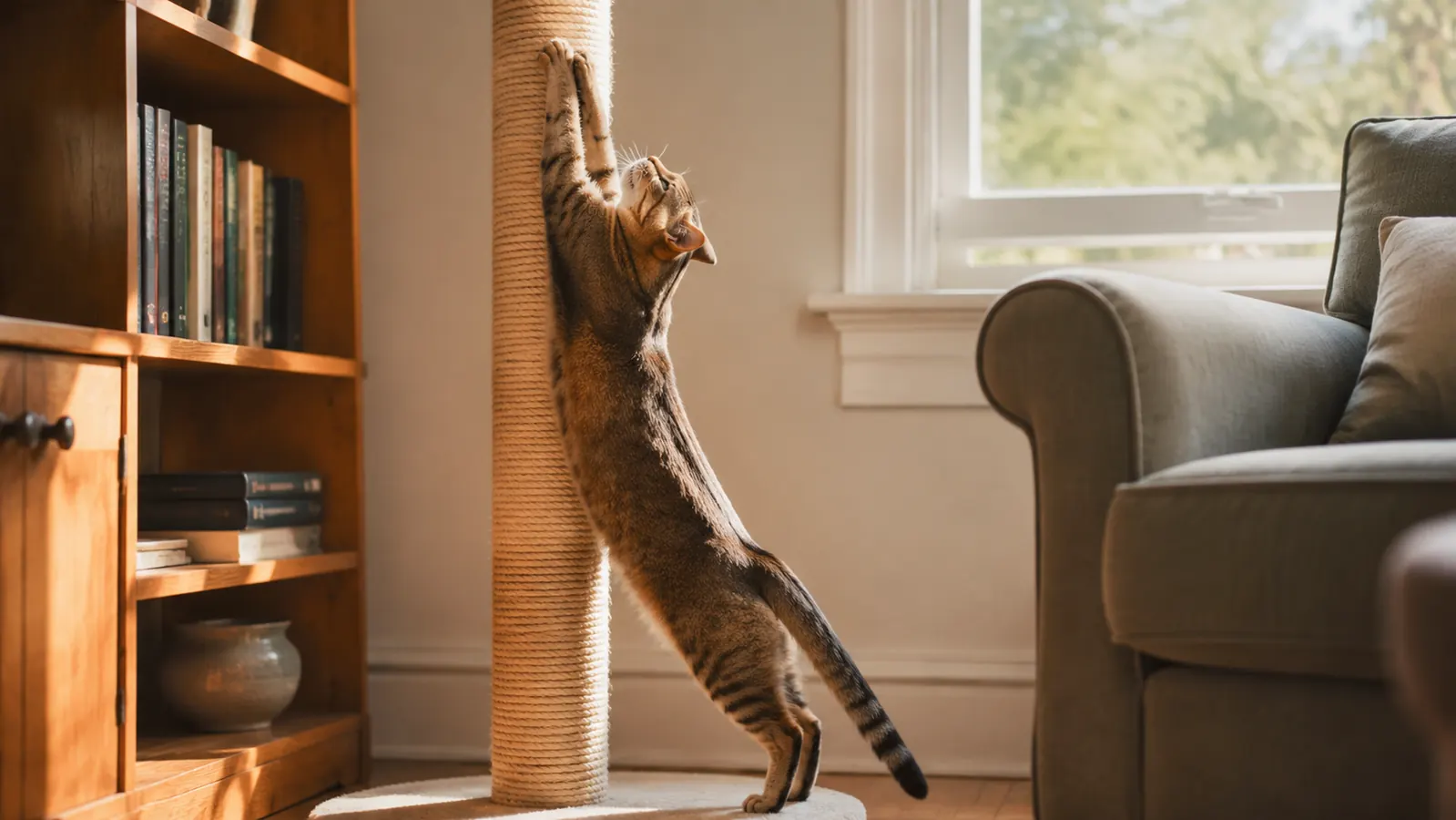
Also notice the height. Our big boy Winston likes a tall stretch, claws sunk in high, back arched. Mabel, the timid one, scratches low and quick near the floor. One single short cardboard scratcher will not satisfy both. If your cats differ as much as mine do, you may need more than one surface, and that is a normal outcome, not a failure.
Step 2: Match the surface to what they already scratch
Cats scratch certain textures because that is what their claws do well and their instinct rewards. A cat shredding the fabric on your sofa is telling you they like a vertical surface with some give. A cat ripping at the rug is a horizontal scratcher. If you hand a vertical-scratching cat a flimsy flat cardboard tray, they will shrug at it and go back to the couch.
Sisal is the surface that matches most furniture-scratching cats because it gives them that satisfying shredding resistance without ruining your stuff. The SmartCat post I landed on is wrapped in natural sisal from top to bottom, so it behaves like the couch but stands where the couch stands. If your cat is a dedicated horizontal scratcher, look for a floor tray with the same sisal or cardboard texture. Match the texture first, and the odds improve dramatically.
One note from experience: skip the posts covered in fluffy carpet. Cats who already prefer upholstery will sometimes go for carpet texturing, but plenty treat it as a nothing surface and walk past it. Sisal is the safest common denominator, and it is what the SmartCat post uses.
Step 3: Put the post where the scratching already happens
Here is the mistake I made the first time. I bought a nice post and set it in the corner of the living room where it looked tidy, far from the couch. Then I wondered why nobody used it. Cats are not going to seek out a good scratching spot. They are going to go to the spot they already decided was theirs, and I had put the competition somewhere they never think about.
So move the post to the scene of the crime. If the shredded arm is the couch end nearest the back door, the post goes right beside that same couch end. Temporarily, it may even sit in front of the spot the cat prefers. The goal is to make the post the easiest, most obvious target so the cat relearns that this corner has a designated thing.
Give it a couple of weeks there before you judge placement. Cats are creatures of routine, and a post in a new spot may need time to become part of the landscape. Once they are reliably hitting the post, you can edge it a few inches at a time toward where you actually want it to live, moving slowly enough that they keep following.
Step 4: Make the couch briefly less appealing while the post wins
You are building a new habit, and to do it you briefly need the old spot to lose. The kindest way is not to punish the cat for scratching the couch, but to make the couch less pleasant for scratching for a short window while the post becomes the obvious winner. This is temporary, not a permanent arms race.
For a couple of weeks, cover the problem corners with a fitted sheet, a light blanket, or double-sided pet tape. Put the tape only on the vertical edges where the claw work happens. When the cat reaches for the couch and gets an unpleasant, sticky or slippery surprise, they turn to the smooth sisal post you put three feet away and that feels exactly right. You are not lecturing them. You are steering them.
Be patient and resist the urge to scold. A raised voice or a squirt bottle teaches the cat to watch for you, not to stop scratching. They do not connect the scolding to the clawing in the way a dog might. You want the couch to become boring on its own while the post becomes the fun, reliable outlet.
Step 5: Reward the right behavior and keep the post fresh
The second a cat uses the post, make it a party. Toss a treat, use a calm happy voice, give a little scratch behind the ears. Cats pick up on which behavior gets a good thing, and they repeat it. Winston figured this out in days once he realized the post came with a reward and the couch no longer did.
You also have to keep the post genuinely worth scratching. A post gets worn down, and that is a good sign, it means they are using it. But once the sisal frays badly or the base starts to loosen, the post stops being satisfying and the furniture suddenly looks good again. Check the post every few weeks. Tighten the base, rotate it if you can, and replace the sisal or the whole post when it goes soft. A well-made post like the SmartCat lasts through our three cats, but nothing lasts forever under constant use.
The Mistake Everyone Makes (Including Me)
Most advice on stopping cat scratching starts and ends with punishment. Spray bottles, loud noises, shooing the cat off the sofa. I tried all of it and I can tell you plainly that none of it worked for more than the few minutes I was standing there watching. The problem with punishment is that cats live in the moment. They are not connecting the scolding five minutes later to the clawing they did before, and they are certainly not learning to do it in a different place. They are only learning that you are unpredictable.
The other dead end is the opposite extreme, buying into the idea that you just need to accept claw marks as part of living with cats on every chair and curtain in the house. That is not true either. Cats do not need to scratch your furniture. They need to scratch something tall, stable, and satisfying, and a well-placed post gives them all of that with none of the damage. The fix is redirection, not resignation, and it is the whole reason this guide exists.
What Else Helps
A few extras that made the difference for us. Keep the claws trimmed, or at least not honed to razors, which cuts the damage if they do sneak a scratch in. Put a second post or a mat near wherever the cat naps, because cats often scratch the moment they wake up. And ignore the expensive pheromone plug-ins and noise devices. In my experience they are gimmicks. A solid post in the right place does more than the whole gadget shelf.
If you have a multi-cat household, remember that every cat wants their own territory to mark. We found that one tall post satisfied only so many cats, which is why we eventually added a low mat for Mabel. Watch whether one cat guards a post against the others, and if they do, that is your cue to add another station rather than fight it. Scratching is how cats leave the message that they live here, and a content cat is one whose claim is respected.
You cannot make a cat stop scratching. You can only make your couch stop being the best option. A stable sisal post in the exact spot they already chose is the whole secret, and there is nothing glamorous about it.
Why the Post Itself Matters More Than the Training
I want to be honest with you that every bit of placement and reward work in this guide assumes you have a post worth scratching. A flimsy cardboard tube wobbles under a real stretch, and a cat who tips their scratching post will abandon it fast, because a post that moves is not the safe, stable marking spot their instinct wants. This is the part most guides skip.
The SmartCat Ultimate Scratching Post is the one that finally held up for us. It is tall enough that Winston can get a full stretch, the base is heavy and does not slide across the hardwood, and the sisal has stayed grippy through six months. That is the practical, well-made thing I look for before I buy anything, and for cat furniture it is the difference between a post that redirects the scratching and a post that becomes a pile in the corner. Cheap posts are a false economy. They fall over, they get ignored, and you end up buying a real one anyway.
Buy the post once, stop replacing the arm of your couch
A sturdy sisal post is a fix that pays for itself the first time it saves a couch corner. If you have tried the flimsy cardboard route and watched it get ignored, this is the upgrade that finally held for us.
Amazon Check Today's Price on Amazon →