
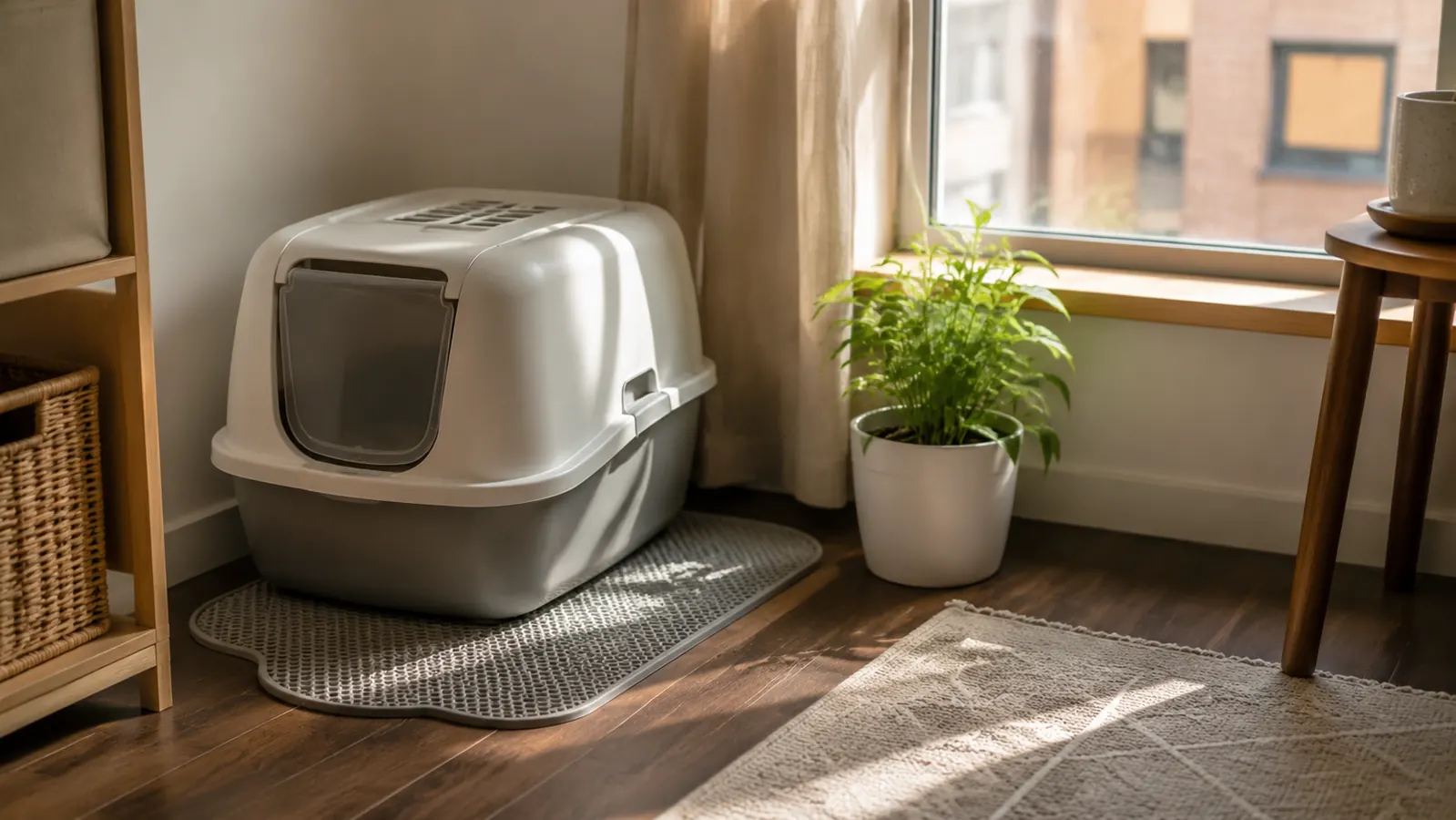
Here's the thing nobody tells you when you first bring a cat home: the litter smell is never really the litter's fault. I grew up with dogs, so I assumed a smell in the corner was the same problem as a dog's, something you just live with and scrub more often. Then I got three cats and learned the hard way that the smell comes from a few specific, fixable things, none of which is the cats themselves.
I'm Nora, and I keep a household of three cats in a small apartment. For the first couple of years I fought the smell with stronger litter, more baking soda, and a lot of scrubbing, and it never really worked. It got better only when I stopped treating the symptom and started fixing the actual causes. This is the five-step routine that finally worked for us, in the order it matters. If you've been masking the smell instead of removing it, this is the whole plan, and none of it is expensive.
Start with a box that actually keeps the smell in
Before you change litter or scrub more, the container matters more than anything. The enclosed Amazon Basics box we moved to is what finally made the rest of this routine stick. Check its current price and see if it fits your corner.
Amazon Check Today's Price on Amazon →Why Smell Builds Up in the First Place
Ammonia from urine and the bacteria that feed on it are what you're actually smelling. Left alone, that ammonia multiplies, which is why a box can smell fine in the morning and knock you over by evening. The smell isn't one thing, it's a chain: a box that lets air out freely, litter that doesn't trap moisture, waste that sits too long, and air that doesn't move.
So the fix is to break that chain at every link, not to buy the strongest scented litter on the shelf and hope for the best. Scented litter just layers perfume over ammonia, and anyone who has been in a cat home knows that combination smells worse, not better. What actually works is boring: containment, absorption, a daily routine, and fresh air. That's the whole plan, and I'll walk you through each piece the way I wish someone had for me.
Before we get to the steps, set the right expectation. No routine removes the smell entirely forever, because cats are going to use the box every day and biology doesn't take days off. What a good routine does is keep the odor low enough that you only notice it when you're right at the box, not from across the room and not when a guest walks in. That's the bar we're aiming for, and it is very achievable.
Step 1: Contain It With a Hooded Box
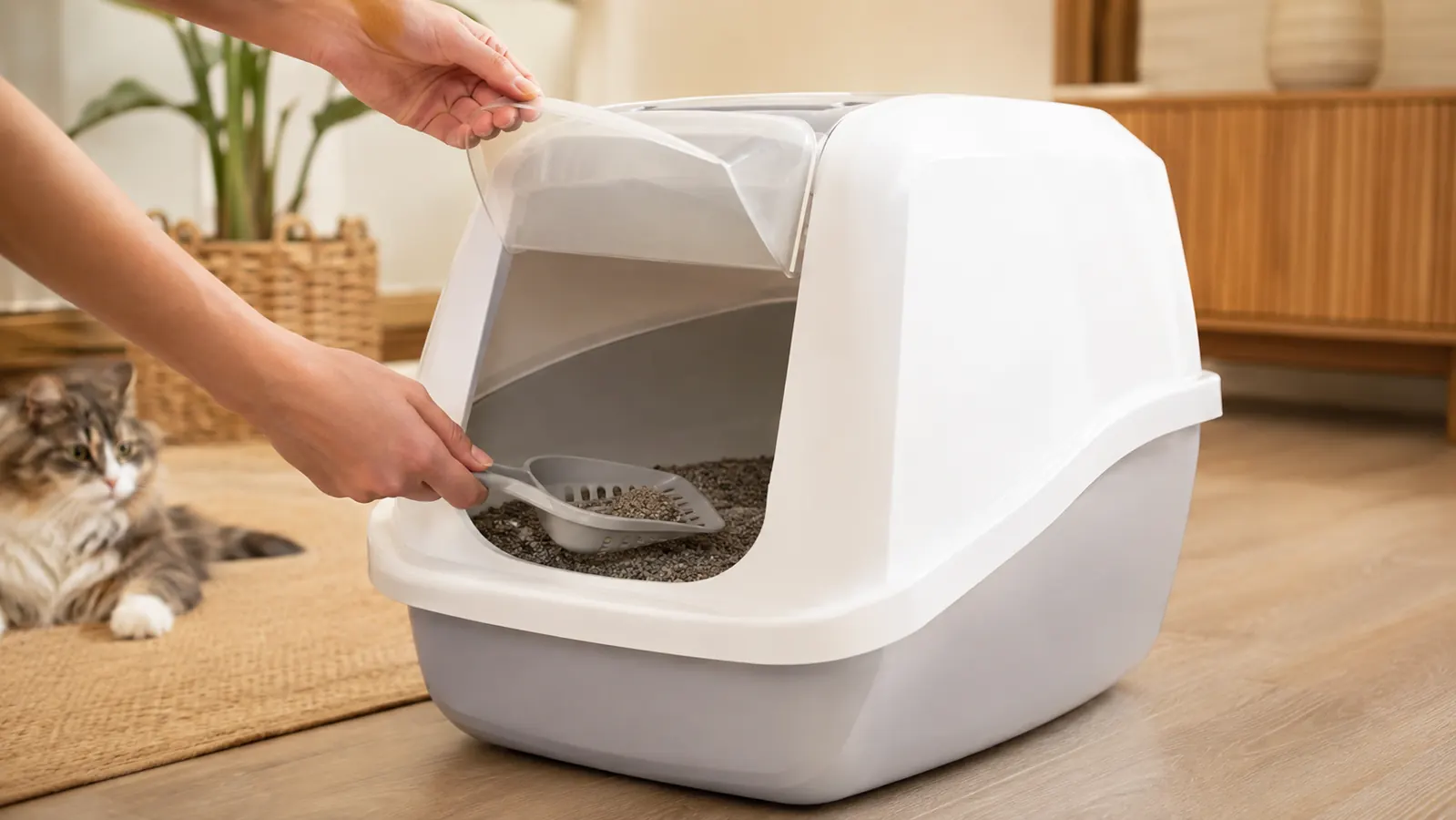
An open tray lets the smell drift straight up into your living space. A covered box with a swinging door holds a lot of that inside until you scoop, which is step one for a reason. We use the Amazon Basics no-mess hooded litter box, and the biggest difference is right there in the name: the hood and the swinging door keep the odor and the litter granules where they belong.
Its footprint is about 24 by 18 inches with a 16-inch tall roof, which fits a corner of our bathroom and even a small apartment. The hooded design also means the cats kick less litter out, which was the second thing driving me nuts before we switched. One thing I checked before buying was whether my biggest cat, a sturdy boy who is not small, could turn around in it comfortably. He can, and that matters, because a cat that can't fit comfortably in his box will find somewhere else he fits better.
If a covered box is new to your cat, leave the door propped open for the first few days. Every cat I've had adjusted within a week, but a couple needed the door open at first, and that's fine. The hood does its job even without the door swinging, because the walls still stop most of the drift and the scatter. Give them the transition, don't force it.
One honest note: an enclosed box is a little more awkward to clean than an open tray, because you're reaching around the hood. That's the trade-off for containment. For us it's worth it, because the apartment stopped smelling like a boarding kennel, and that was the whole point.
Step 2: Pick Litter That Absorbs, Not Just Covers
Clumping clay is still the most reliable everyday choice for smell control, because it wraps the moisture and the ammonia in a solid clump you can lift out whole. We go through about a bag every two to three weeks for three cats. The Amazon Basics box holds a good depth of it, and a solid two to three inches is the sweet spot. Too shallow and clumps fall apart on the scoop, leaving the smell behind.
Perfumed litters are the gimmick to skip, and this is where I sound like a broken record. A lime or lavender scent does not remove the smell, it just prices up a thing you'll be tossing out anyway. Plain unscented clumping litter plus a routine beats fancy scented litter every single time, and your cats will thank you too, because cats smell a lot more than we do and a perfume blast is not pleasant for them. If you're on scented litter now, switch to a plain clumping brand for a week and see if the smell actually got better or just got covered up.
When you switch brands, do it slowly. Mix a little of the new litter into the old over a few days rather than dumping the whole box at once. Cats can be particular about texture under their paws, and a sudden change can make them avoid the box. We rotate between two plain clumping brands depending on what's on sale, and nobody complains as long as the switch is gradual.
Step 3: Scoop Every Day on a Schedule
This is the step nobody wants, and it is also the single most effective one. If waste sits overnight, the ammonia has hours to build. We scoop once in the morning, usually with my coffee, and it takes about two minutes for three cats. That morning pass alone cut the smell in our apartment by more than I expected, more than any litter switch ever did. This is the one step I would never skip, even if I had to skip every other one for a week.
The key is making it a habit tied to something you already do, not a chore you remember when you catch a whiff. For us it's coffee. For you it might be brushing your teeth or checking your phone. Called scooping on a schedule, it means the smell never gets a chance to build up in the first place, which is the whole trick. Two minutes a day sounds trivially small, and it is, and it does more than any expensive product in the pet aisle.
With more than one cat, check the box twice during the day if you can. Three cats share one box in our home, which goes against the usual one-per-cat advice, and it works because we scoop morning and evening on busier days. Make sure you scoop from all the way down, not just skim the top, because urine clumps sink and the smell lives at the bottom. The top layer can look clean while the bottom is where the ammonia is hiding.
One two-minute scoop with my morning coffee cut our apartment's cat smell more than any litter switch I ever tried, and it took me two years to realize that was the real fix.
Step 4: Give the Corner Some Air
Cats like a box in a quiet, low-traffic spot, but quiet and low-traffic can also mean a closed, stale corner where the smell sits. We ended up with the box near an air vent and a window that opens, and the difference was immediate. Moving air carries the ammonia away instead of letting it pool around the box. It sounds too simple to matter, and then you live with it for a week and realize it matters a lot.
If you can't put the box near a vent, a small air purifier set up nearby works well, and we've done that in the summer when the window is closed. Aim for airflow, not a draft that startles the cat. The cats should feel safe, but the air shouldn't be dead. This one step is easy to skip because it seems cosmetic, but it does real work. Just keeping the bathroom fan on for ten minutes after each scoop helps a surprising amount when we remember it.
Step 5: Dump and Wash on a Regular Schedule
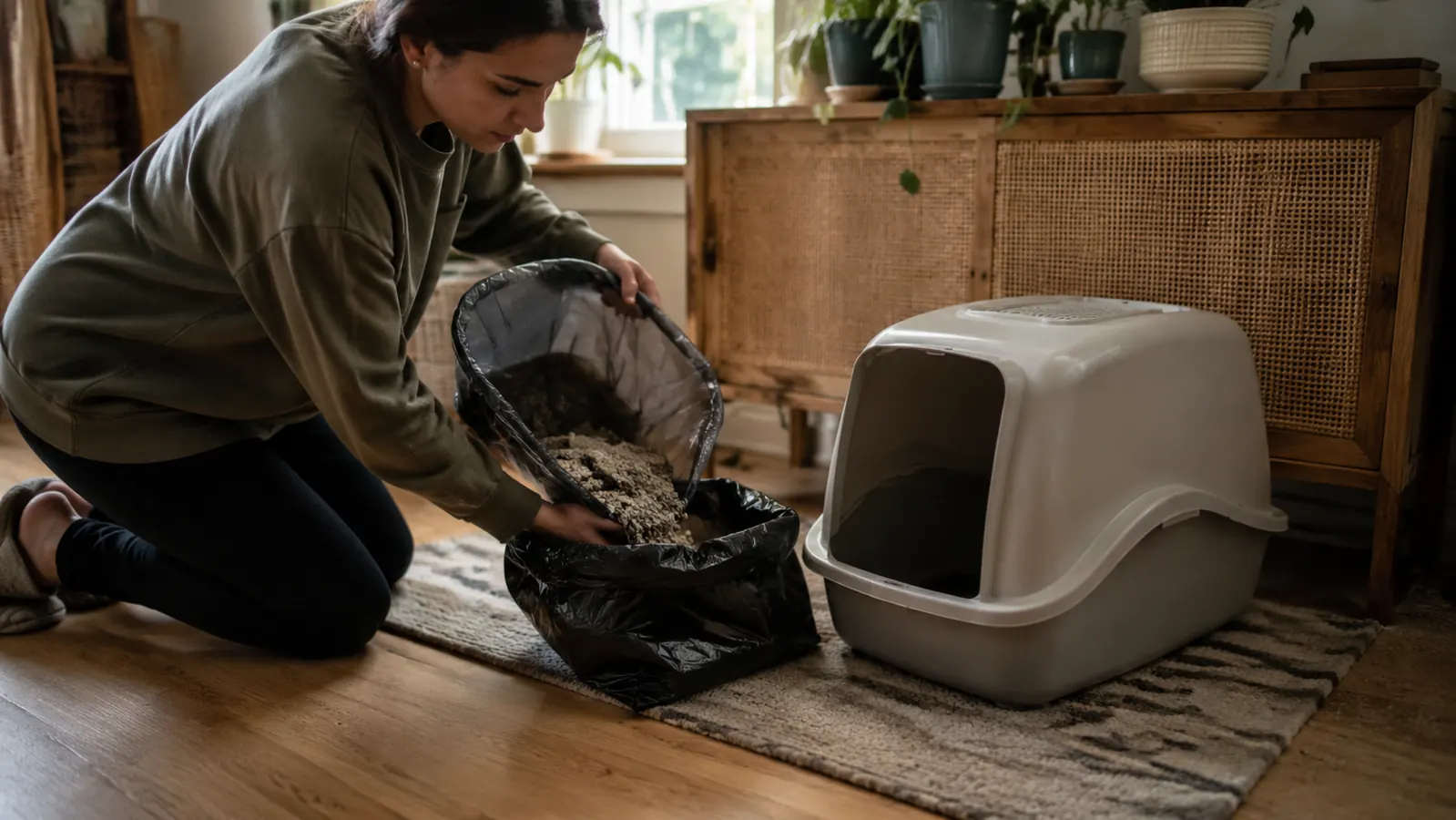
Clumping litter gets rid of the solids, but it doesn't get rid of everything. Over two to three weeks, residue and bacteria build up in the tray itself, and that's when a complaint starts even right after the morning scoop. We fully dump the box, wash the tray with warm water and a mild soap, dry it, and refill on the first of every month. It takes twenty minutes and it resets the whole thing. Put it on your calendar like any other monthly chore, or it quietly never happens.
Use a plain mild soap, not bleach or anything strong. Cats have sensitive noses and paws, and a lingering chemical smell can make them avoid the box altogether, which then becomes a much bigger problem. A clean, dry, neutral-smelling tray is what you're after, and once you do the monthly reset, you'll notice the smell stays gone instead of creeping back. Wipe the hood and the swinging door while you're in there, because odor collects on the plastic too.
Do not deep-clean with strong cleaners while the cats are watching you scrub, and don't assume a daily scoop means you can skip the monthly dump. They are two different jobs that handle two different problems. The scoop removes today's waste, and the monthly reset handles everything that builds up invisibly in the tray. Both matter, and one does not replace the other.
What Else Helps
A few small additions round out the routine. A thin layer of baking soda under the litter catches some odor without being a gimmick. One litter box per cat, plus one extra, is the older rule of thumb and it's still the right one for multi-cat homes, because it gives every cat a clean option and spreads the load. And keep an eye on water intake, because concentrated urine smells stronger, which is one more reason a drinking fountain is worth considering. A cat that drinks more produces thinner, less pungent urine.
A washable mat under and in front of the box catches the litter granules that stick to paws and travel across the floor. That's not directly an odor thing, but tracking litter makes a room feel dirtier than it is, and a clean-feeling room is easier to keep smelling clean. We use a simple rubber mat we rinse in the tub once a week. It is cheap, it works, and it means I'm not sweeping granules out of the hallway all day.
There will still be an occasional strong day, especially if a cat is stressed or you fall behind the scooping by a day. That's normal and it's not a failure of the routine. The goal is a home that smells like people, not like nothing. You want the cats to live there fully, and you want the corner to not announce itself the second a guest walks in.
What I'd Tell You if We Were Sitting at My Kitchen Table
If we were sitting at my kitchen table, here's what I'd say plainly. Stop buying stronger perfume and start with the container and the routine, because that's where the smell actually lives. Try the enclosed box, pick a plain unscented clumping litter, scoop every morning with your coffee, give the corner some air, and do one monthly deep reset. That is the whole thing, and it costs far less than the scented-litter aisle would have you believe.
I'm not going to pretend an enclosed box is magic, because it's not. My cats still smell, on a bad day, up close, and the box still needs scooping and washing like any other. What the routine does is take the smell from an ever-present thing you dread to an occasional, manageable thing you barely notice. That is a much better way to live with animals, and it's worth the twenty minutes a day it costs.
It took me a couple of years and three cats to figure out that the answer was boring, and I'm saving you that time. Start with the box, because containment is the foundation everything else sits on. My three and I are happy with the Amazon Basics enclosed box, and if you've been living with the smell, it's the first step worth taking.
Your corner can stop announcing itself
The enclosed Amazon Basics box is the foundation of the whole routine. If you're tired of catching a whiff every time you walk past, this is the step that makes the rest of it work. Check today's price and see if it fits your space.
Amazon Check Today's Price on Amazon →