

I keep a lint roller in every room of the house, but I never expected to keep one on top of the bread box. That was the low point of last spring with Mabel, my long-haired girl: a loaf cooling on the counter while her undercoat drifted into the kitchen like tumbleweed. I grew up with dogs, and believe me, dogs shed. But a dog's loose fur falls on the floor, and a cat's is different. Mabel was swallowing hers.
By March I had worked through the cheap brushes from the pet aisle, a slicker that skimmed her topcoat, and a rubber mitt that collected more fur off the couch than off the cat. The fur kept coming. At her checkup the vet said Mabel was not overgrooming, she simply has a real undercoat and I was never reaching it. That phrase, never reaching it, sent me hunting for a tool that actually pulls the deep shed. I landed on the Maxpower Planet double-sided grooming rake, and six months of Saturday mornings later I have opinions you can use.
The Quick Verdict
Ten minutes a week with this double-sided rake pulls more loose undercoat than every other brush I own combined, and after six months Mabel is friendlier to the whole ritual than she ever was to a slicker. What it will not do, and I know this now, is stop a shorthair's shedding.
Amazon Check Today's Price →The rake that finally reached my long-haired cat's undercoat
If one of your cats is a long-haired shedder and your couch is running a lean fur allowance, this is the tool I would buy first. It is gentle enough that a wary cat settles in within weeks, and it does the deep work the slicker never touches. Check today's price on Amazon and see whether it earns a spot beside your cats too.
Amazon Check Today's Price on Amazon →How I've Used It
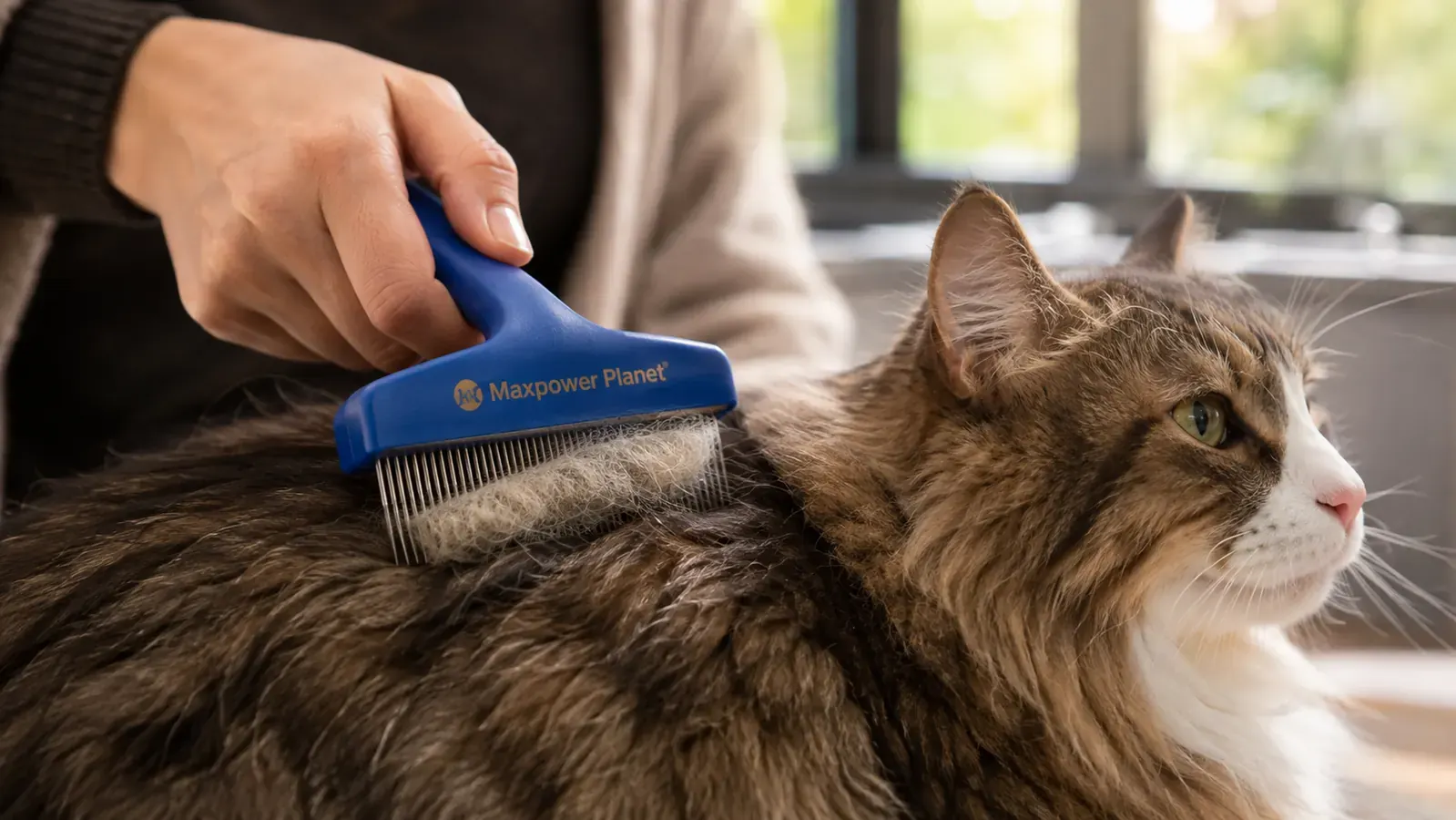
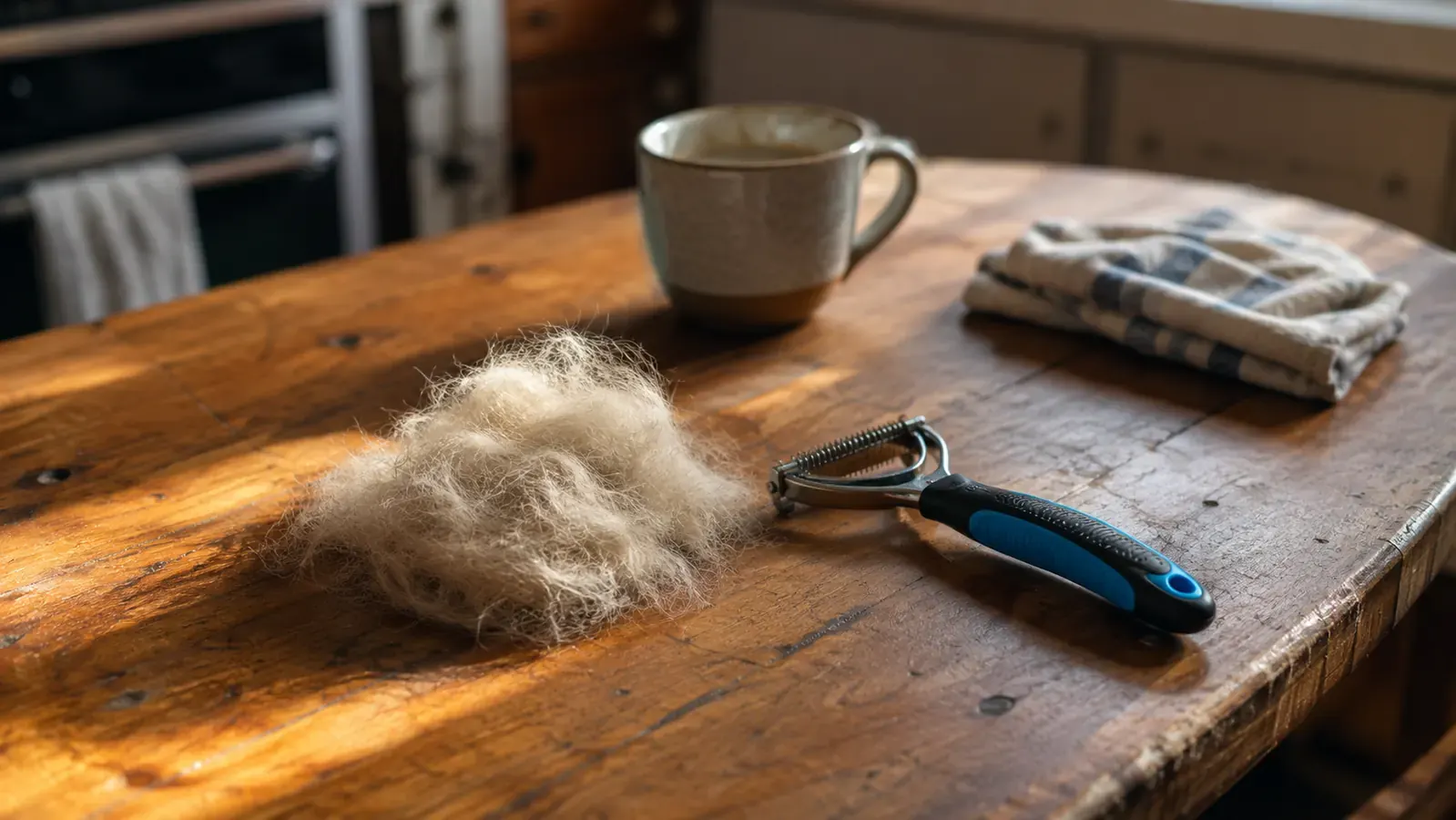
Every Saturday since the first week of March, same routine. I spread an old towel on the back porch when the weather allows, or over the kitchen table when it does not, and I brush Mabel there so the shed lands on something I can carry to the washer. She gets the wide-tooth side first, a few slow passes from her shoulders to her flanks to lift any tangles. Then I flip the tool to the close-set pin side and work in short strokes, with the grain, the way I would card a sweater rather than hack at it. Ten minutes, tops. Longer if she rolls over and decides it is spa day.
The handle is plain molded plastic, wide and long enough that I can grip it properly on a big cat. The pins are rounded at the tips, and that detail matters more than any feature list: a hooked or pointed tooth drags at the skin, and a cat will only tolerate a brush she trusts. The first session was not pretty. Mabel flattened her ears, twitched, and twice tried to leave. I kept the strokes light and short, and I quit while she was still curious rather than annoyed, and that is how we got to the good part.
The results were not subtle. That first Saturday a pile roughly the size of my fist came off her back onto the towel, and she was barely halfway through. It has stayed consistent ever since: a fist's worth every week from spring through summer. That is why we had been lint rolling everything we own, because the fur was coming off her in a coat I was never reaching, and I have the towel piles to prove it.
Cleaning the tool is the reason it has lasted six months instead of rusting in a drawer. Every few sessions I rinse the head under warm water, let it air dry on the dish rack, and wipe the handle with a cloth. There is no motor, no cartridge, no replacement head to buy, and nothing about it has worn out. I have brushes in this house that cost more and died faster, which is the whole reason I review cat gear the way I bake: start simple, and trust what survives.
What the Double-Sided Rake Actually Does
Here is the thing it took a grown woman with three cats to admit. An ordinary brush polishes the topcoat. It makes the cat look brushed. But most of a long-haired cat's shed is undercoat, that soft dead layer closest to the skin, and a slicker or a bristle never reaches it. You polish the surface while the deep coat keeps shedding underneath, which is exactly how you get fur on your bread and a cat who sheds even though you brush her every single day.
The Maxpower Planet rake has two sides for exactly this. The wide-tooth side works through mats and snags first, slow and gentle. The close-set pin side is the workhorse: the pins are long enough to get down to the undercoat, and the teeth catch the loose fur and pull it up to the surface where it lands on your towel, instead of leaving it against her skin where she will lick it off herself. That last piece is the whole ball game, and it is the part dog people never see coming.
See, a dog who is losing coat just drops it around the house. A cat cleans the same loose fur with her tongue. Every strand your brush never reaches goes straight down her throat, and that is how a perfectly groomed cat still hacks hairballs onto your rug. Rake the loose undercoat off before she can swallow it, and you cut the hairballs off at the source. I did not learn that in a grooming class. I learned it on my knees wrestling a vacuum hose.
What Changed Over Six Months
The honest number first: this does not stop shedding. Nothing stops a cat molting in spring, and I will not pretend this brush does. What the rake does is move the molt from my clothes, the furniture, and Mabel's stomach onto a towel I can throw in the wash. Somewhere around the third month I noticed I was lint rolling less. By June the couch was recognizable as a couch.
The hairball math is the part I can actually put a number on. Last spring, before the rake, I was on hairball cleanup duty every other week and pulling the vacuum hose apart twice. This spring, March through July, two hairballs total, both during the heaviest week of the molt. At Mabel's annual checkup in May I mentioned the change, and the vet said the undercoat was up off the skin, and that is the layer that actually causes the trouble.
Mabel's demeanor changed too, and slower. She used to flatten her ears and slink off the moment I picked up any brush. Now she hears the towel snap on the porch railing and she is already there, flopped and waiting. It took six weeks to reach that point, and I do not think any brush earns that sort of trust in one sitting. It is the long game that wins with a cat.
Eleven minutes a week pulled more undercoat off my long-haired cat than a year of slicker brushes, and the hairballs dropped from every other week to two all spring.
Seasonal Fur, and the Calendar I Follow
One thing nobody told me before the rake arrived is that long-haired cats do not shed at a steady rate. They blow their coat. In this house the big molt lands in late March and again in early October, and for those two windows a weekly once-over stops being enough. Through April I brush Mabel on the porch every other day, because if I skip a session the furnace-like undercoat rebuilds fast enough that I can feel it in the air.
Tracking the season is the most useful habit I picked up. I keep a small note on the kitchen shelf by the bath salts, because I am a person who writes things down, and it tells me when to expect the lows between the sheds. Knowing the calendar also keeps me from blaming the brush on a normal high-shed day, which is the kind of patience no cat review mentions but you end up needing anyway. Between molts, once a week keeps her clear all year. And when the April molt peaks, I bake less bread that week, because even the best rake in the world is not beating a cat undercoat that is in a hurry to leave.
Where It Falls Short
I have not made it all the way to love on two fronts. First, this is a long-coat tool, and it says so on the box. My two shorthairs read the pin side as a scratch, because there is not enough coat for the pins to grab anything useful, and they were not shy about telling me. I keep their grooming on the slicker and the rubber mitt and save the rake for Mabel. If every cat in your house is a shorthair, buy a mitt instead and keep the spare cash.
Second, the fur does not stay put in the tool. It gathers between the teeth and rides along, and every few strokes I have to flick the pile off onto the towel. It is a thirty-second chore, and it is the same on a Furminator, but I mention it because some listing somewhere calls this brush mess-free, and it is not. It is controlled chaos on a towel, which is why we do it over a towel in the first place.
And one caution from six months in. The pins are only as kind as the hand using them, because this is a rake, not a massage. Press hard and you will scrape skin that then has to heal, and a cat with a sore patch will not come near the brush for weeks. Short strokes, light hands, with the grain. Raked gently, Mabel took about a month to purr through it. Raked hard, any cat will learn to hate the thing forever.
Alternatives I Considered
If you are deciding between tools, the two I went back and forth on were the Furminator and a set of shedding gloves. The Furminator is the name in deshedding and it does real work, slicing through a thick undercoat faster than anything, but it costs several times as much and its short blade needs a cat with a high pain threshold. For a house with one long-hair and two shorthairs I weighed that carefully, and in the end the gentler no-blade design and the price gap won. If you want the full head to head, my rake versus Furminator comparison goes into the minutiae.
The shedding gloves were the opposite lesson. My shorthairs adore them, and they are completely useless on undercoat, mostly good for petting a cat and collecting surface fur. I also tried one of those grooming stones, which made a horrible noise against Mabel's long coat and was out of the house within a week. For the deep undercoat problem, nothing I tried reached it the way the Maxpower Planet rake's long pins do, and I say that as someone who tests every cat gadget she buys the way she tests a new bread recipe: change one thing, then watch.
What I Liked
- Long pins actually reach the undercoat that slicker and bristle brushes never touch
- Two sides: wide teeth work through tangles first, close pins pull the deep shed
- Round-tipped pins are gentle enough that a wary cat settles in within weeks
- Simple, no batteries or moving parts, and easy to rinse clean between cats
- The price is a fraction of the name-brand deshedders
Where It Falls Short
- Fur catches between the teeth and has to be flicked off every few strokes
- Too aggressive for very short coats, and my shorthairs will not touch it
- No guard on the pins, so you have to learn a light hand or you risk scratches
- It does not stop shedding, it moves the shed onto your towel
Who This Is For
Long-haired cats first, full stop. If you have a Maine Coon, a ragdoll, a Himalayan, or any cat with a true undercoat, this rake is the tool that finally reaches the fur your slicker ghosts. It is also for anyone tired of hairballs, anyone lint rolling every dark item they own, and anyone whose cat would rather hide than be brushed. Give it six weeks of patience, once a week, and the hiding stops. And if you are still trying to convince yourself grooming is worth the bother at all, my ten reasons cats need a deshedding brush is the argument I wish someone had handed me first.
Who Should Skip It
Skip it if your cats are all shorthairs, because there is nothing here for their coat and they will tell you so. Skip it if you have a cat so skin-sensitive that even gentle brushing is a battle, because a rake, even a kind one, is still a rake. Skip it if you are after a miracle that ends shedding forever, because there is no such brush and no honest review will claim otherwise. And skip it if you expect your cat to enjoy being raked on the first try. That trust has to be built, and it gets built on their schedule, not yours.
Start where I did, with the simple, honest, well-made tool
Buy the budget double-sided rake, use it gently once a week over a towel, and give your long-haired cat a few weeks to settle into the ritual. You will know within a month whether the deep shed is moving onto your towel instead of your sofa and your bread box. That is exactly how I would decide, over coffee at my kitchen table.
Amazon Check Today's Price on Amazon →